
planetary-gear-reducer
Planetary Gear Reducer
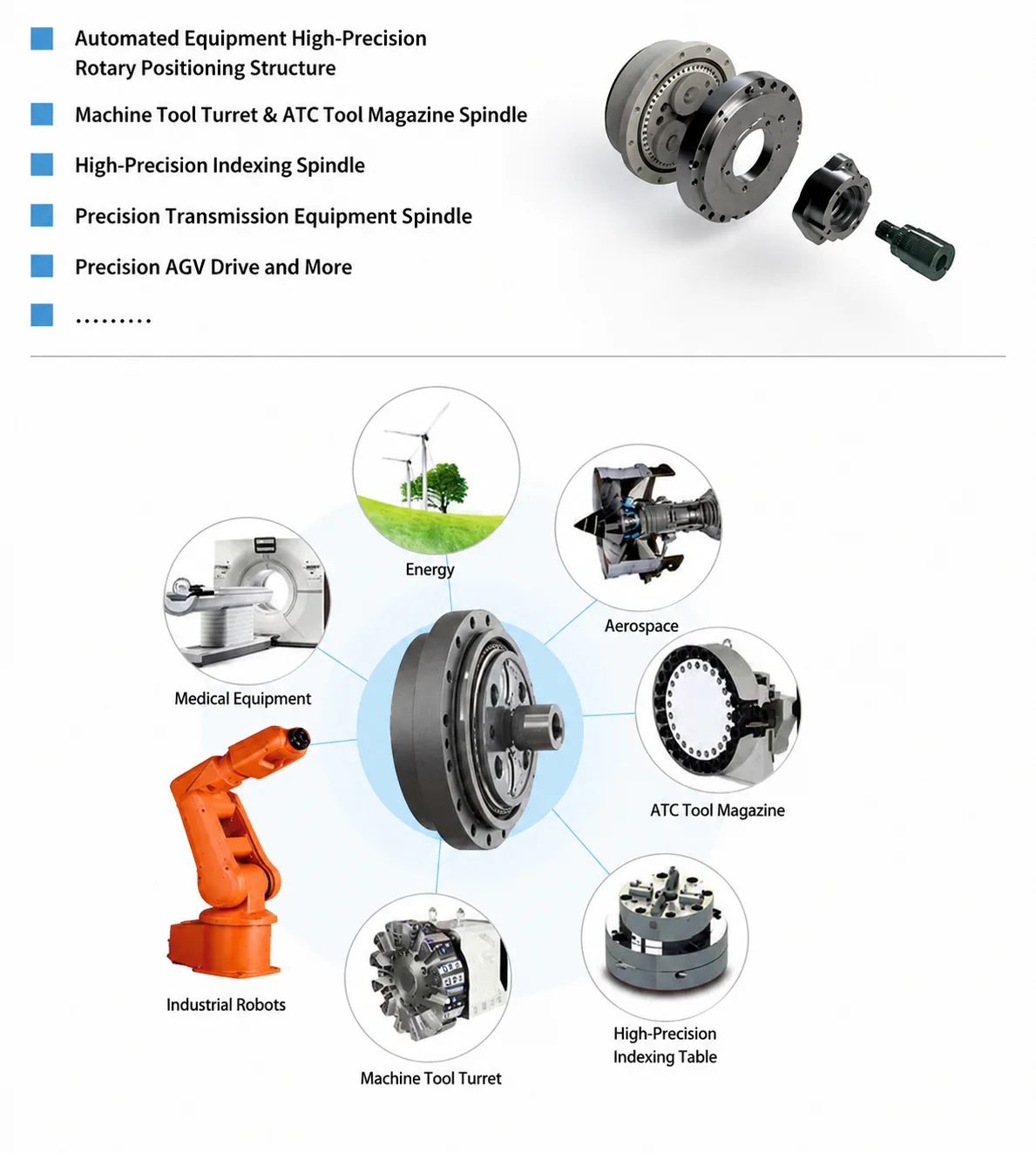
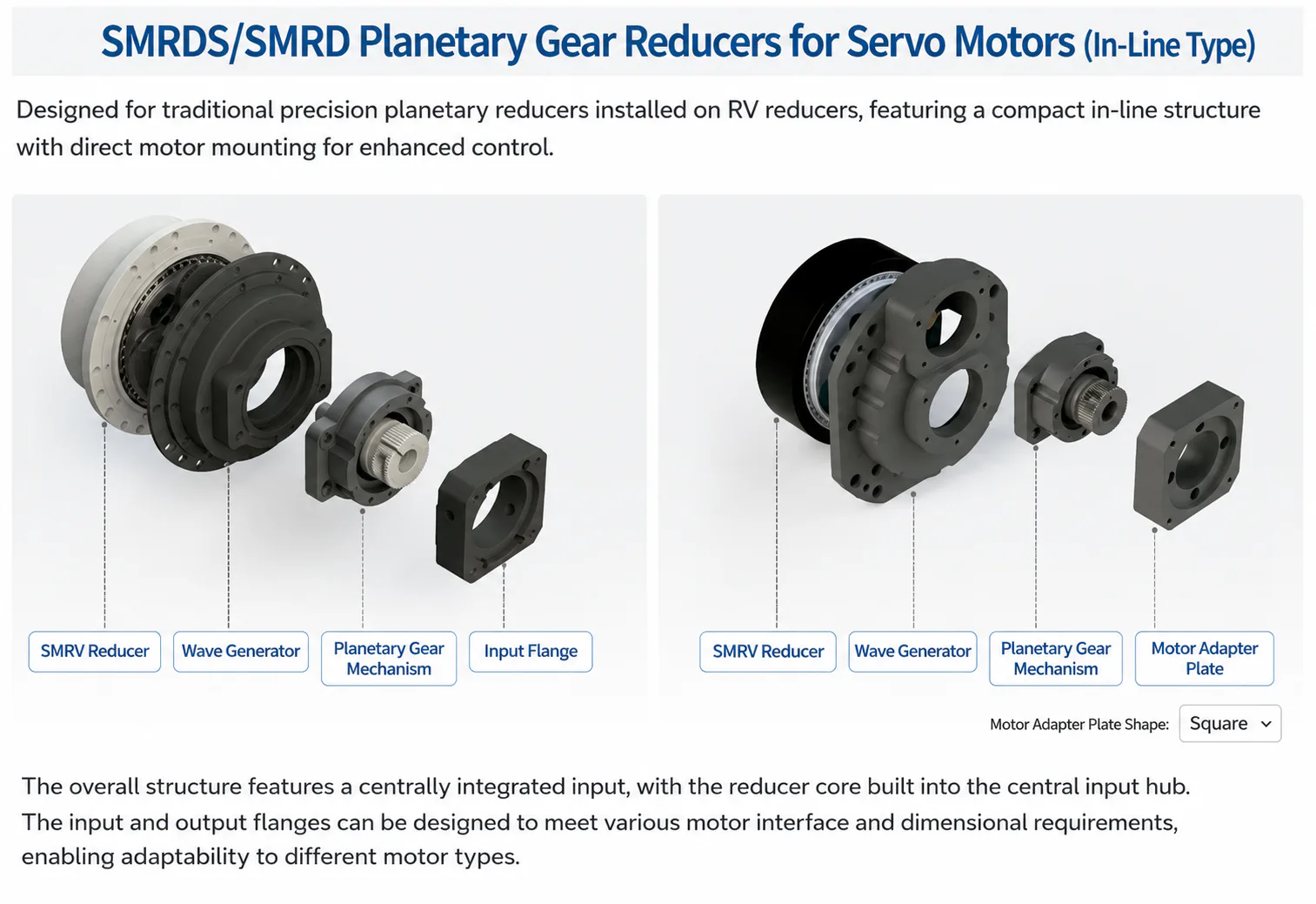
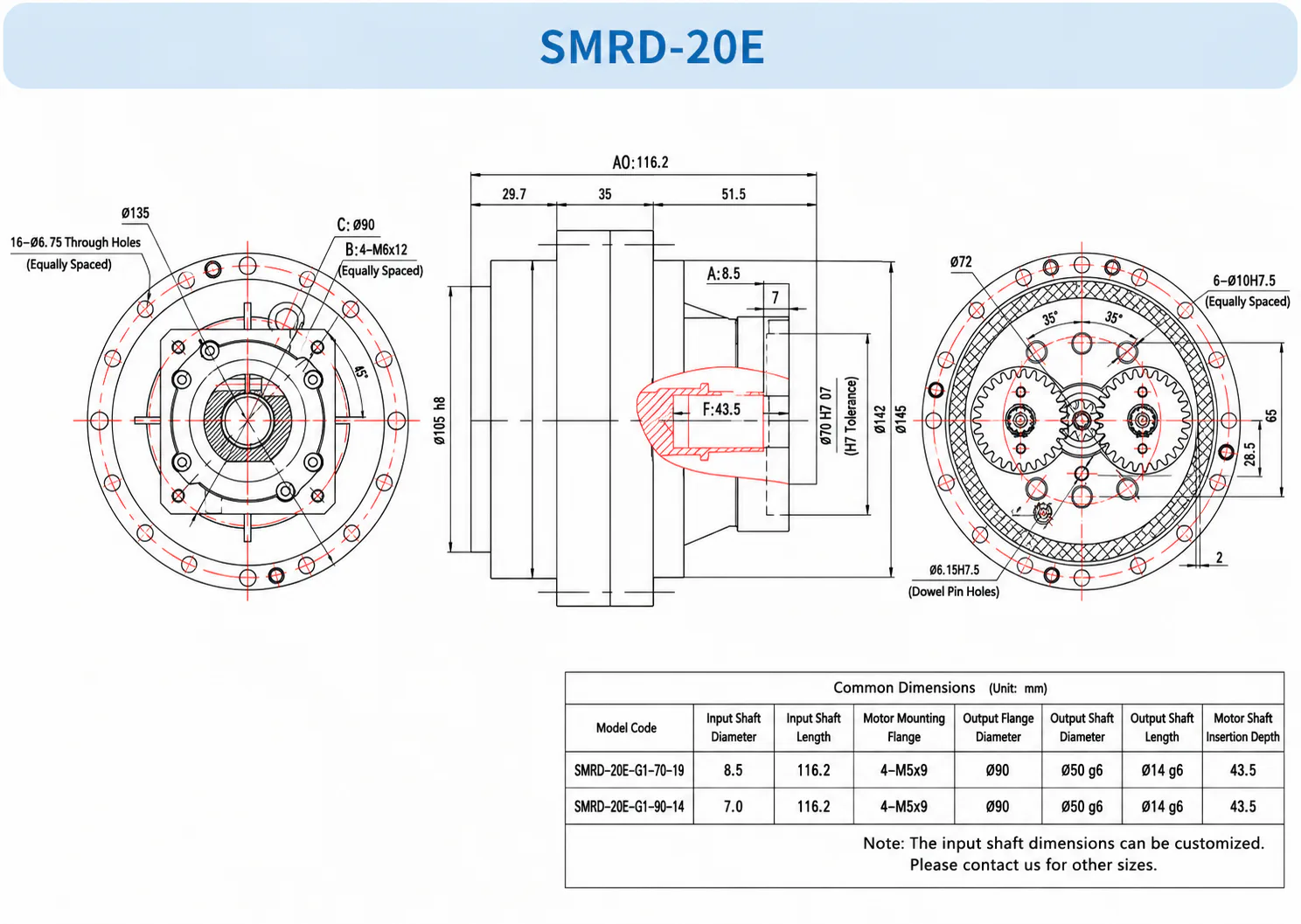
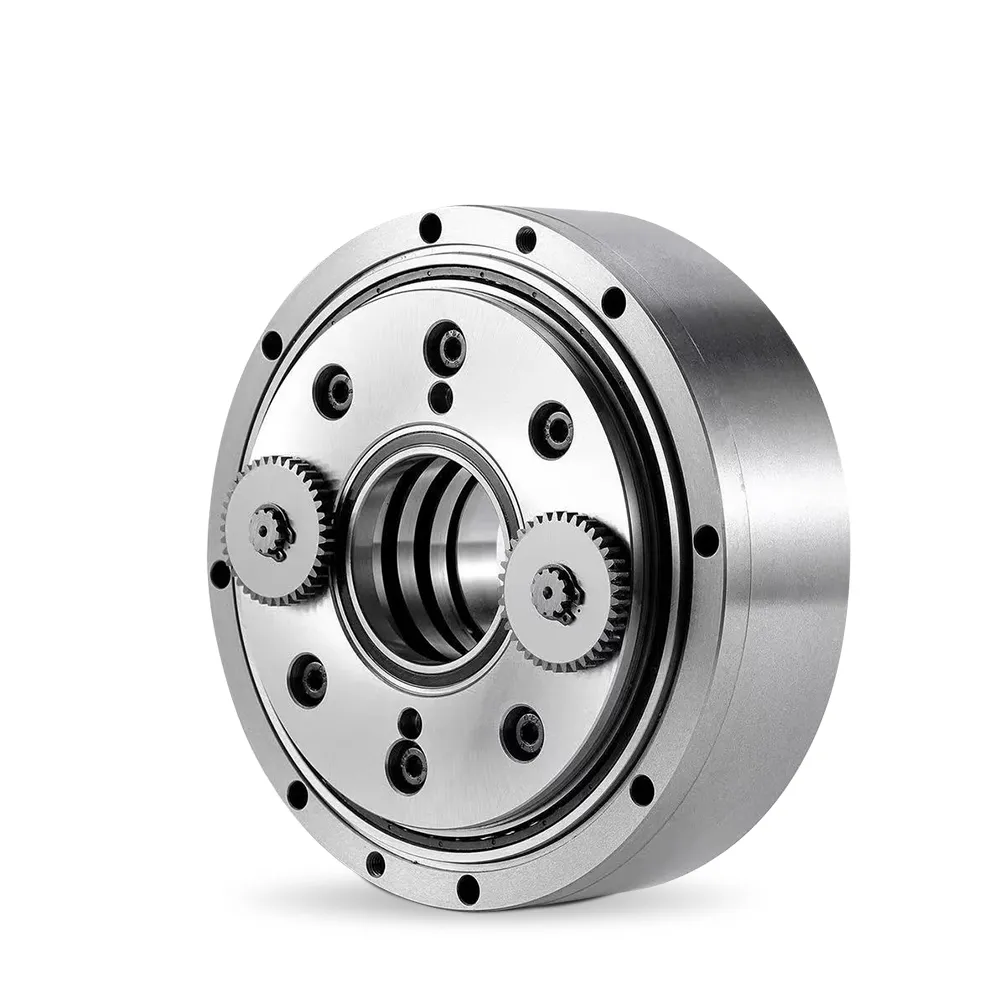
The motor-integrated precision planetary cycloidal reducer manufactured by HY combines a traditional RV mechanism with a direct motor-coupling structure. Distinguished by its compact size, high shock resistance, high torque, high positioning accuracy, low vibration, and high reduction ratio, it is widely used in fields such as industrial robotics, machine tools, medical testing equipment, and satellite reception systems.
Request a quote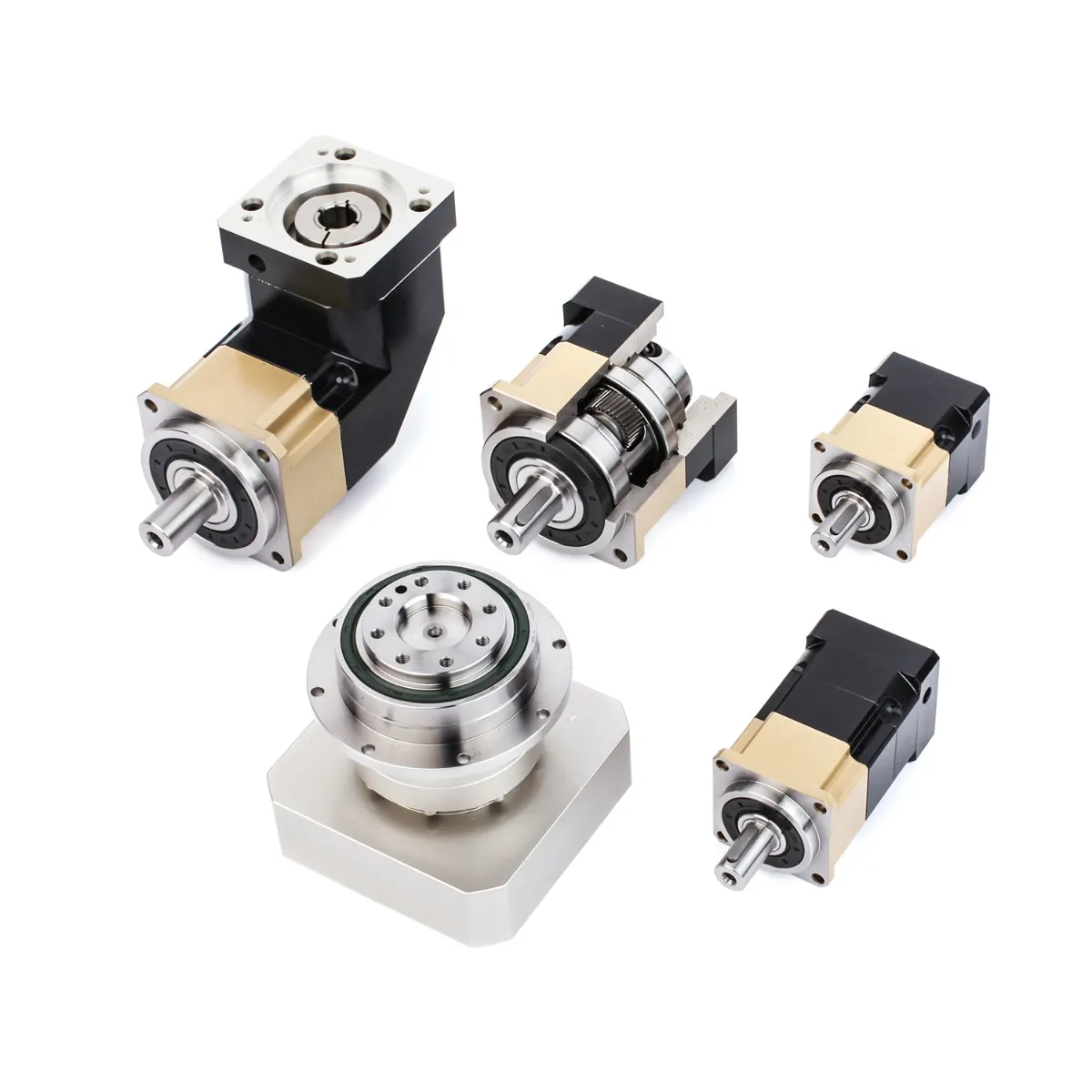
Overview
Rated Life
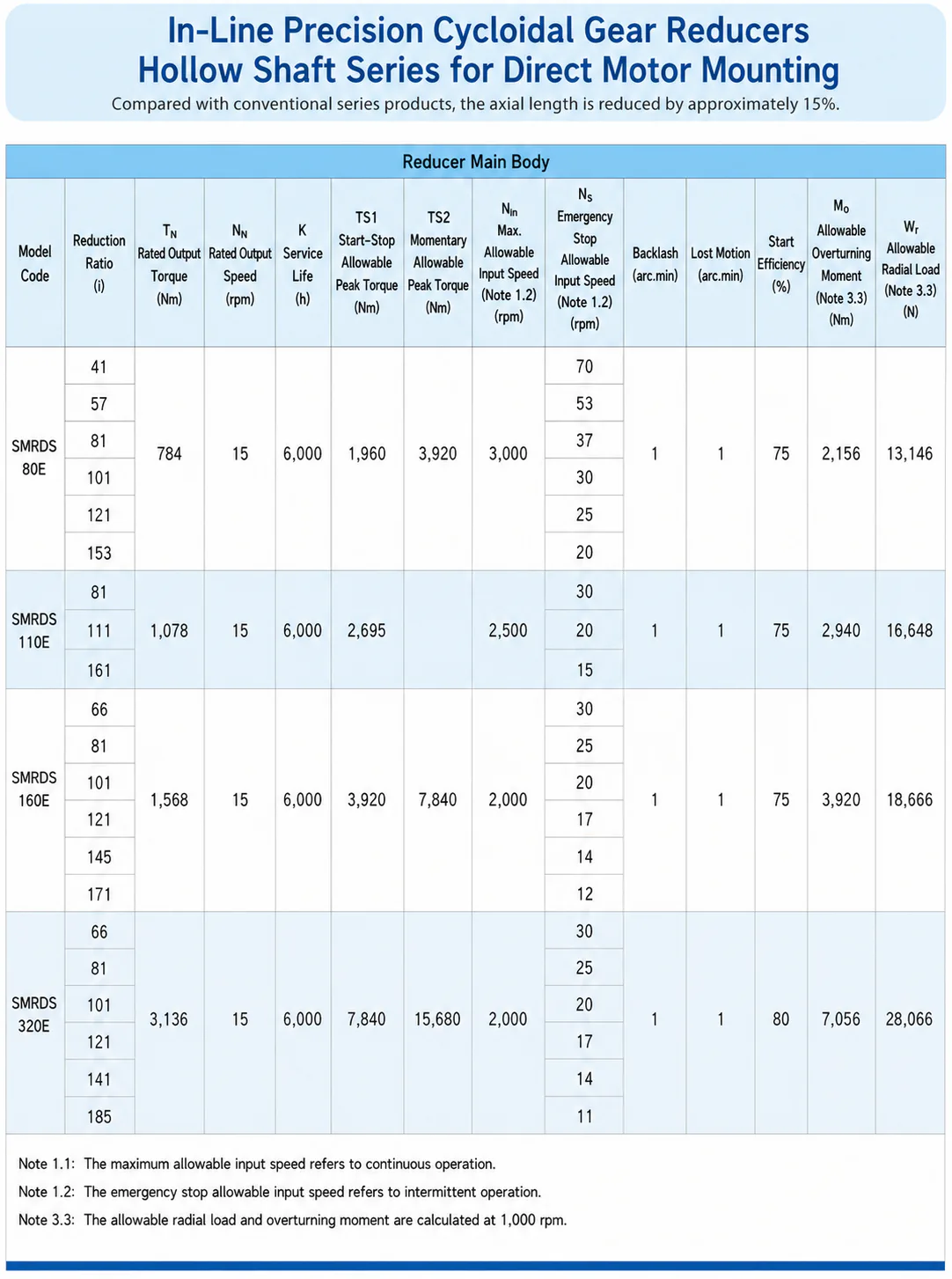
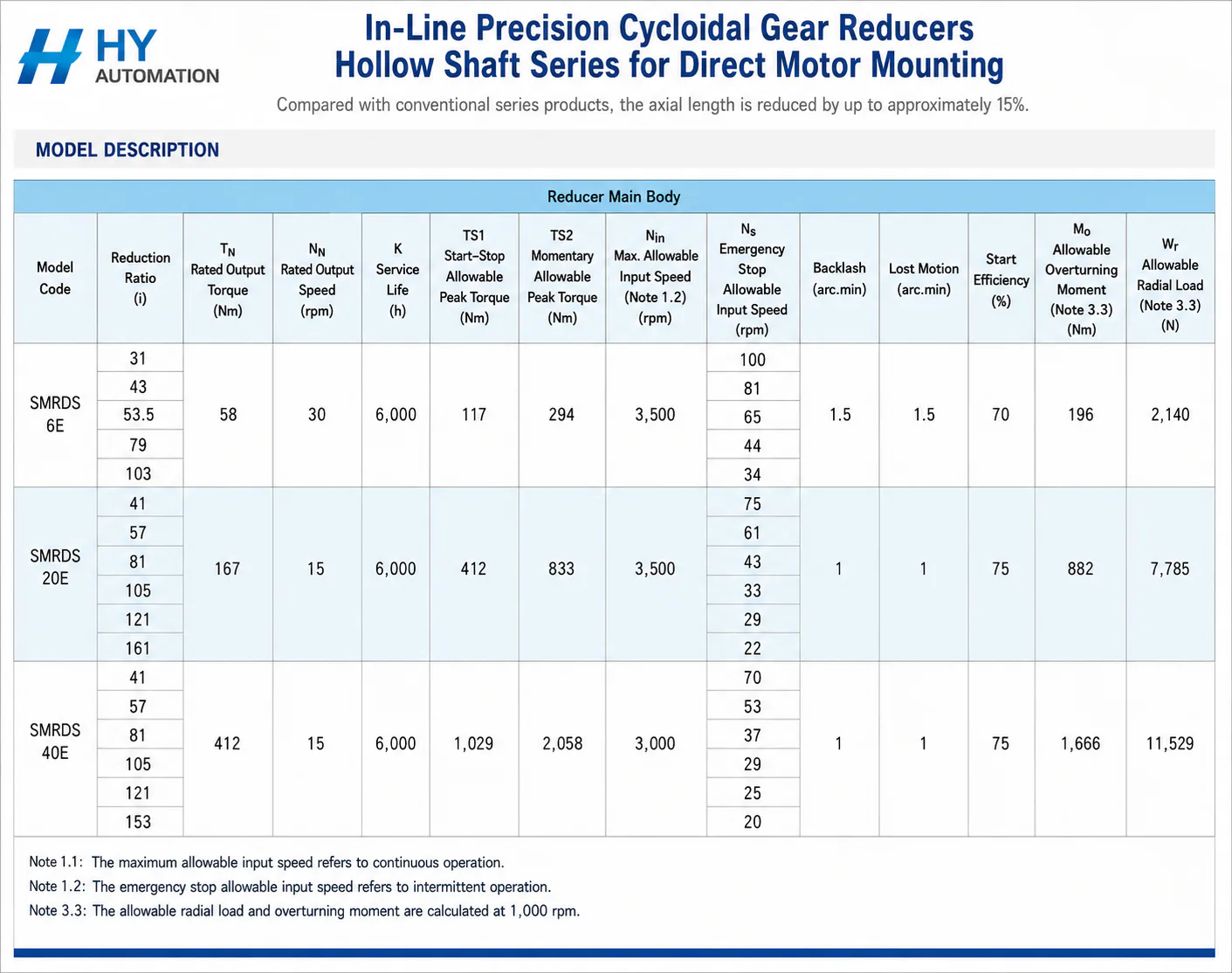
The service life when operating at rated torque and rated output speed is referred to as "Rated Life."
Permissible Torque for Start/Stop
During startup and stopping, the load torque applied to the speed reducer is higher than during steady-state operation due to the inertial torque of rotating parts. The permissible limit for this condition is called "Permissible Torque for Start/Stop."
Note: Ensure that the torque applied during startup and stopping does not exceed the permissible torque for start/stop.
Maximum Instantaneous Permissible Torque
Note: Ensure that excessive instantaneous torque does not exceed the maximum instantaneous permissible torque.
High torque may be applied to the speed reducer during emergency stops or upon impact from external sources. The permissible limit for this condition is called "Maximum Instantaneous Permissible Torque."
Permissible Input Speed
The permissible limit for input speed is called "Permissible Input Speed."
Note: Depending on the gear ratio, the speed reducer's temperature may rise significantly even when operating below the permissible input speed. In such cases, operate at a speed that keeps the speed reducer's temperature below 60°C.
Permissible Output Speed
The permissible limit for the speed reducer's output speed is called "Permissible Output Speed."
Note: Depending on operating conditions (load, ambient temperature), the speed reducer's temperature may exceed 60°C even when operating below the permissible output speed. In such cases, operate at a speed that keeps the speed reducer's temperature below 60°C.
Reference Value for Permissible Output Speed
This refers to the output speed at which the temperature rise of the speed reducer remains below 40°C during continuous unidirectional rotation at rated load torque.
Note: Please operate the unit in an environment and under conditions that maintain the speed reducer's temperature below 60°C.Torsional Rigidity, Lost Motion, Backlash
If the input shaft is fixed and torque is applied to the output shaft, a corresponding torsional response occurs, forming a hysteresis curve. The ratio b/a is defined as "torsional rigidity." The torsional angle at the midpoint of the hysteresis curve's width—measured at ±3% of the rated torque—is defined as "lost motion." The torsional angle where the torque is zero on the hysteresis curve is defined as "backlash."
Starting Efficiency
The efficiency of the speed reducer at the instant it transitions from a stationary state to motion is defined as "starting efficiency."
Moment Rigidity
When an external load generates a moment, the output shaft tilts in proportion to that moment. Moment rigidity represents the stiffness of the main bearing and is expressed as the moment required to tilt the shaft by a unit angle (1 arc-minute).


Frequently asked questions
Related products
Need a custom laser solution?
Tell us about your application and technical requirements. Our team will help you identify the right components.